
Beat the Kentucky Heat: How Proper Attic Ventilation Protects Your Roof and Lowers Your Energy Bills
We all know how the summer heat and humidity can settle over the Bluegrass region. As temperatures climb, your air conditioner works overtime, and your energy bills can skyrocket. But what if one of the biggest culprits behind your home’s summer struggles isn’t the sun beating down on your windows, but rather the heat trapped right above your head? Your attic can become a super-heated oven during a Lexington summer, silently damaging your roof and forcing your HVAC system into overdrive. The solution is often simpler and more effective than you might think: proper attic ventilation. A well-ventilated attic is the unsung hero of a healthy, energy-efficient home. It creates a system that allows your house to breathe, extending the life of your roof, improving comfort, and providing significant savings on cooling costs. In this guide, we'll explore why attic ventilation is so critical and how to tell if yours is up to the task.
The Hidden Dangers of a Hot Attic
Without a way to escape, the air in your attic can reach temperatures of 150°F or more on a hot day. This intense, trapped heat doesn't just stay put; it radiates downward into your living spaces, making your home warmer and forcing your air conditioner to run constantly just to keep up. This directly translates to higher utility bills. But the financial strain is only part of the problem.
This extreme heat can cause significant damage to your roofing system from the inside out. It can essentially bake your asphalt shingles, causing them to become brittle, curl, and lose their protective granules far sooner than their expected lifespan. The structural integrity of your roof is also at risk, as high temperatures can warp and crack the wooden decking and rafters over time. Furthermore, Kentucky's notorious humidity adds another layer of risk. When warm, moist air from your home rises into a cooler attic at night, condensation can form. Without proper airflow to dry it out, this moisture can lead to mold, mildew, and rot, compromising your home's structure and air quality. Essentially, a poorly ventilated attic shortens your roof's life and creates a host of expensive problems.
Signs Your Attic Can't Breathe
How do you know if your home is suffering from poor attic ventilation? The signs aren't always obvious, but if you know what to look for, you can spot potential issues before they become major headaches. Here are a few key indicators:
- Unusually Hot Upper Floors: If the second story of your home feels significantly warmer or stuffier than the ground floor, it's a strong sign that heat is radiating down from the attic.
- Sky-High Summer Energy Bills: While energy costs are rising everywhere, a sudden spike or consistently high cooling bills compared to previous years can indicate your AC is fighting a losing battle against a hot attic.
- Visible Moisture or Frost in the Attic: During cooler months, check your attic for any signs of condensation, damp insulation, or frost on the underside of the roof decking. This is a clear red flag for moisture buildup due to inadequate airflow.
- Prematurely Aging Shingles: Take a look at your roof. Are the shingles curling at the edges, cracking, or blistering? While this can be a sign of age, it can also be caused by excessive heat from below.
- Ice Dams in Winter: Though we're focused on summer heat, poor ventilation also causes problems in winter. Heat escaping into the attic melts snow on the roof, which then refreezes at the eaves, creating destructive ice dams. This indicates a year-round ventilation problem.

The Solution: A Balanced Airflow System
Effective attic ventilation isn't about simply adding a vent or two; it's about creating a balanced system that promotes continuous airflow. The principle is simple: cool, dry air comes in, and hot, moist air goes out. This is typically achieved with two types of vents working in tandem.
- Intake Vents: Located in the soffits or eaves (the underside of your roof's overhang), these vents allow cool, fresh air to be drawn into the attic from outside.
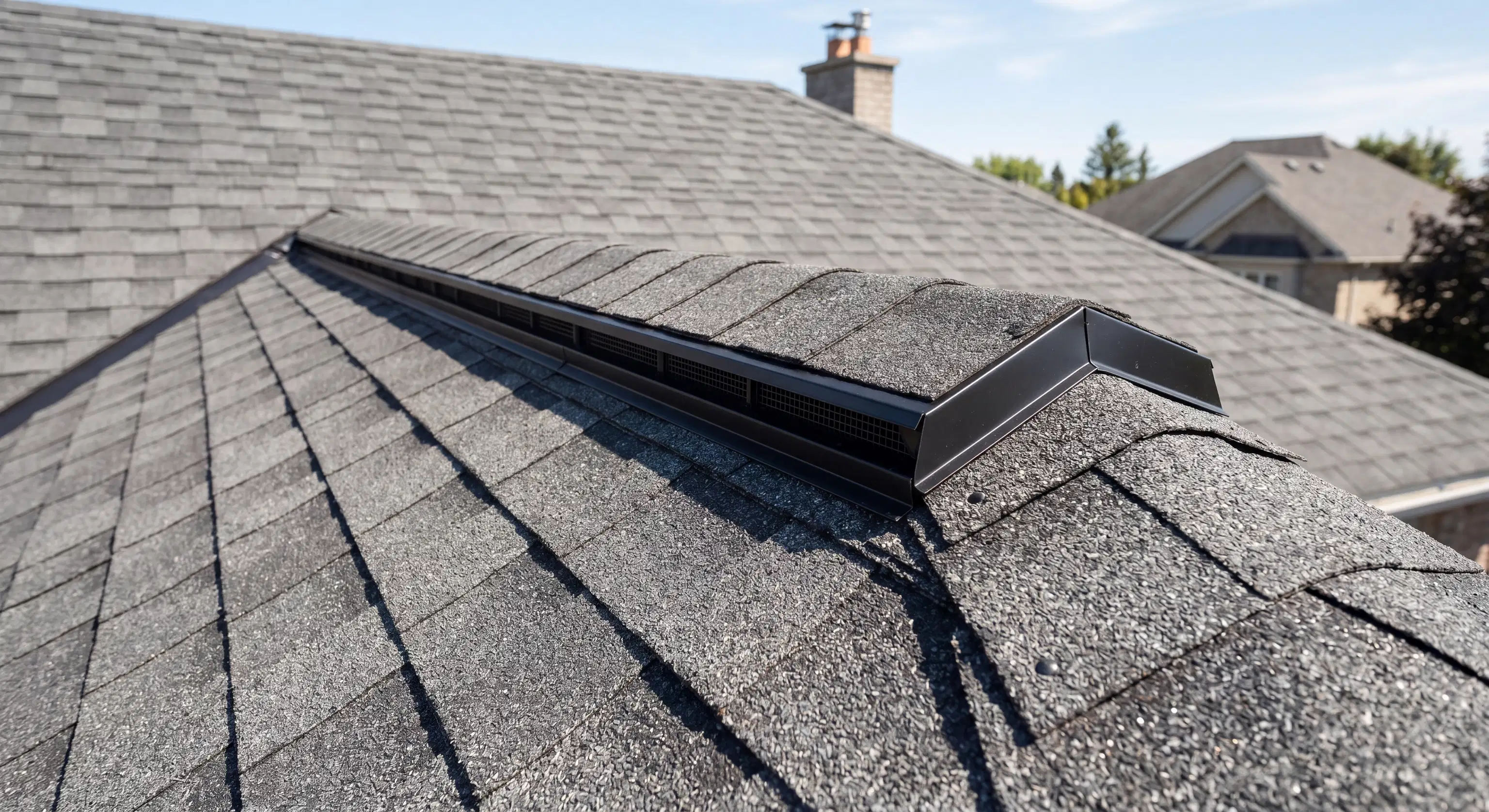
- Exhaust Vents: Positioned at or near the peak of the roof, these vents allow the hot, humid air that rises naturally to escape. Common types include ridge vents (which run along the entire peak), box vents, or wind turbines.
A balanced system has an equal amount of intake and exhaust ventilation. Too much of one without the other can be ineffective or even counterproductive. This is why a professional assessment is so crucial. During a residential roofing inspection, an expert can calculate the precise amount of ventilation your attic needs based on its size and your roof's design, ensuring your home is protected and efficient.
Your home's entire exterior envelope works together to protect you from the elements. Properly installed siding and a well-maintained gutter system are also key to ensuring your home's structure is sealed and water is directed away, allowing your roof and ventilation system to perform optimally.
Take Control of Your Home's Comfort and Efficiency
Optimizing your attic ventilation is one of the smartest investments you can make in your home. It's a solution that works year-round to protect your roof, lower your energy bills, and create a more comfortable living environment. By addressing the signs of poor airflow and ensuring you have a balanced system, you can prevent costly repairs and extend the lifespan of your entire roofing structure.
If you suspect your attic isn't breathing properly or you're concerned about high energy costs, don't wait for the peak of the Kentucky summer heat to take action. The team at UnderCover Roofing has the local expertise to assess your home's complete roofing and ventilation system. We can identify issues and recommend the most effective solutions for your specific needs. Contact us today to schedule a comprehensive inspection and ensure your Lexington home is ready to handle whatever the season brings.