Roof replacement · Lexington & Cincinnati/NKY
Old roof, or storm damage? Find out what it actually needs.
We inspect it, photograph every finding and give you a straight answer. If it needs replacing, we build every layer to manufacturer requirements and code, and photograph each one before it’s covered.
There’s no charge for the inspection and nothing to sign. If the roof doesn’t need replacing, we’ll tell you.
- 5.0 Google rating
- CertainTeed ShingleMaster
- 10-yr workmanship warranty
The questions an aging roof raises.
Answered plainly, before anyone asks you to sign.
Does my roof need replacing, or does it have life left?
Replacement makes sense when problems are widespread: granule loss across the field, brittle or curling shingles, leaks in more than one place, soft decking, or storm damage across the roof. If yours has life left, that’s the first thing you’ll hear.
What actually goes into a new roof?
More than shingles. Decking, underlayment, ice and water shield, flashing and ventilation keep the water out, and they’re covered up on day one. See every layer
What happens on install day?
Most replacements take 1 to 3 days. You’ll know your crew’s arrival time and your project lead. Landscaping, AC units and the driveway are protected before tear-off, and the site gets a magnetic nail sweep before we leave.
What’s the warranty?
Two separate promises. Our 10-Year Workmanship Warranty covers the installation, and it comes from us. CertainTeed’s manufacturer warranty covers the materials.
Manufacturer warranty details
UNDERCOVER is a CertainTeed ShingleMaster.
Landmark / Landmark PRO Lifetime Limited Transferable warranty against manufacturing defects, with 10 years of non-prorated SureStart™ protection included. Algae resistance StreakFighter® warranty: 25 years (Landmark), 30 years (Landmark PRO). Wind Standard 15-year, 110 MPH. We install the required CertainTeed starter and hip & ridge components, which raises it to 160 MPH. Optional upgrade SureStart™ PLUS 4-Star: non-prorated manufacturing-defect coverage extended to 50 years on qualifying single-family detached homes, plus 15 years of workmanship coverage backed by CertainTeed. Requires a qualifying CertainTeed Integrity Roof System® installed by an eligible CertainTeed-credentialed contractor. Ask us whether it is available for your roof. All manufacturer coverage is subject to CertainTeed’s warranty terms.
Can I pay over time?
Yes. Financing is available through Hearth. See financing options
A roof is a system. We build every layer.
Installed to manufacturer requirements and local code, and photographed before it’s covered.
- Shingles. The weather surface.
- Starter strip. Seals the first course so wind can’t lift the edge.
- Underlayment. A secondary water barrier over the whole deck.
- Ice & water shield. At the eaves and in the valleys.
- Roof deck. Inspected after tear-off.
- Rafters / trusses. Anything concerning is photographed.
- Drip edge. Sends water into the gutter, not behind the fascia.
- Ridge vent. Lets hot, moist attic air out.
| Tear-off | Existing roofing removed and disposed of; landscaping, siding and windows protected. |
|---|---|
| Deck | Inspected after tear-off; damaged sheets replaced with 7/16″ OSB. |
| Underlayment | Synthetic: CertainTeed RoofRunner. |
| Ice + water | Ice and water shield at eaves and valleys. |
| Shingle system | CertainTeed SwiftStart starter, Landmark® or Landmark® PRO shingles, Shadow Ridge hip & ridge. CertainTeed is our standard. If you want something specific, we install all shingle lines. |
| Flashing | Replaced, not reused: step, counter and apron flashing; aluminum drip edge. |
| Penetrations + vents | Pipe boots and applicable roof ventilation replaced. |
| Closeout | Complete cleanup, magnetic nail sweep and final inspection. |
A recent replacement, start to finish.
Drag the handle, or use the arrow keys, to compare before and after.


Lexington, KYRetail replacementCompleted Oct 2026
Retail replacement
Two-story brick home: weathered brown shingles replaced with a new charcoal roof, main roof and side wing.
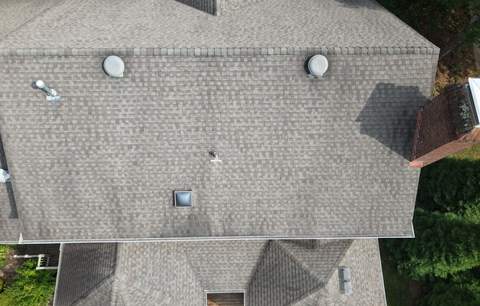
The old roof at inspectionLexington, KY · Oct 2026 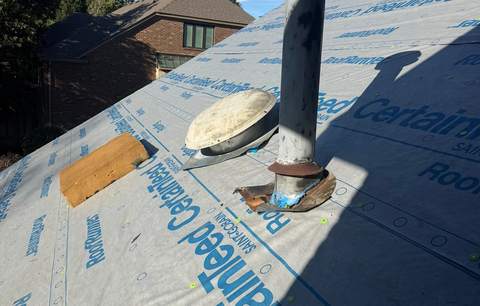
Synthetic underlayment, before shinglesLexington, KY · Oct 2026


Documented, step by step.
You get a photo of every step that ends up hidden.
Inspection
Roof, flashing, ventilation and the attic where we can get in.
Every finding photographedStraight answer, options side by side
Plain language and photos. Standard and FORTIFIED priced line by line.
Written proposalTear-off and deck check
Once the old roof is off, the deck is inspected. Damaged sheets are replaced with 7/16″ OSB.
Deck photographedBuilt layer by layer
Underlayment, ice and water, flashing, starter, shingles and ridge, to manufacturer requirements and code.
Each layer photographed before it’s coveredWalkthrough
Cleanup, nail sweep and a final walkthrough with you.
Photo record + warranty paperwork
In their words, unedited.
Google reviews that mention this work, word for word.
- Google
I recently had UnderCover replace our roof, and we couldn’t be happier with the results. From the initial inspection with Christian to the final walkthrough with Adam their team was very professional and transparent. We received a fair, detailed quote and there were no surprises. They communicated every step of the way. The crew was efficient, completing the job in one day! They took great care to protect my landscaping. They really did an amazing job of the cleanup. I feel very blessed that we have our new roof it made our home look very nice. I highly recommend UnderCover Roofing.
Vickie W.Google review - Google
Undercover Roofing just replaced my roof and did an excellent job. Their professionalism and communication was top-notch. Their workers were amazing. They knew exactly what they were doing. I was super impressed with their cleanup and their timely response in this huge job. I very rarely recommend companies anymore, but I was here for the entire process and witnessed the work ethics of the workers and the owners and highly recommend them if you have any Roofing jobs. They did an outstanding job and staying in touch with me the entire time Christian and Addam were both professional and amazing. I highly recommend this company.
Teresa S.Google review - Google
Undercover Roofing team went above and beyond in handling my roof replacement project. They were attentive to my timeline request and completed the work exceeding expectations. The services are reasonably priced.
Addam and Christian, thank you for the exceptional customer service.
Mudita A.Google review
ShingleMaster PRO vs. the handyman roofer
CertainTeed’s ShingleMaster PRO credential means our team passed CertainTeed’s installer and quality exams. It lets us register CertainTeed’s upgraded warranty on your roof.
| Compare | UNDERCOVER, ShingleMaster PRO | Handyman roofer |
|---|---|---|
| Who installs it | Team passed CertainTeed’s Master Craftsman installer exam and Shingle Quality Specialist exam | No manufacturer testing required |
| Workmanship backed by | CertainTeed, for 15 years (SureStart PLUS 4-STAR) | Only the roofer’s own promise |
| Non-prorated coverage | 50 years | 10 years (standard SureStart) |
| Tear-off and disposal covered | Yes | No |
| Transferable if you sell | 20 years | Not included |
4-STAR coverage applies to a complete CertainTeed Integrity Roof System on single-family homes. Terms are CertainTeed’s; we’ll show you the warranty in writing. CertainTeed’s warranty details
Short answers.
- What does a new roof cost?
- It depends on the size and pitch of the roof, how many layers come off, how much decking needs replacing, and the shingle line you choose. We don’t guess over the phone. After the inspection you get a written proposal, priced line by line, standard and FORTIFIED side by side.
- Do you install metal roofs?
- Yes, standing seam and exposed-fastener metal. More on metal roofing.
- How long does it take?
- Most replacements take 1 to 3 days, depending on the roof and the weather. You’ll know the schedule and your project lead before work starts.
- What happens at an inspection?
- We check the roof, flashing, ventilation and the attic where we can get in, and photograph every finding.
- Is every UNDERCOVER roof FORTIFIED?
- No. FORTIFIED is an upgrade you choose. What FORTIFIED changes
- What does building code require on a reroof?
- Christian walks through it in what Lexington building codes mean for your roof replacement.
We replace roofs across Central Kentucky, in Louisville and in Cincinnati and Northern Kentucky. What’s different in each place: Lexington, Georgetown, Nicholasville, Versailles, Richmond, Danville, Frankfort, Louisville and Cincinnati & Northern Kentucky.
Four rules. Every job.
- Tell the truth. If it doesn’t need replacing, we say so.
- Document everything. Every layer photographed before it’s covered.
- Communicate clearly. You always know what’s next, and who to call.
- Own the outcome. If something goes wrong, we make it right.
Schedule your inspection.
We inspect it, photograph it and explain exactly what we found.
There’s no charge for the inspection and nothing to sign. If the roof doesn’t need replacing, we’ll tell you.
- NextDuring business hours, we usually call you back within minutes. Your roof is inspected within 48 hours. Want to reach us first? Text (859) 300-0710.
- HoursMon–Fri 8am–6pm, Sat 9am–5pm
Prefer to call? (859) 300-0710