When did the storm actually hit your house?
The short answer
Your insurance company cares about when the damage happened, not only whether it’s there. Most policies give you a set amount of time to report a loss, and adjusters check storm dates against it. Dents in gutters and vents are not the same as damage to your roof. Know your storm history before anyone tells you that you have a claim.
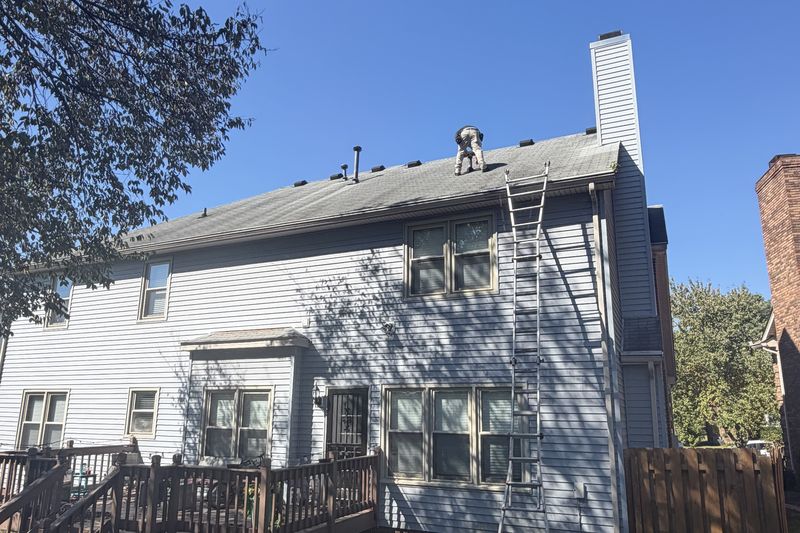
Here’s a situation most homeowners never hear about until it’s their house.
A homeowner had already decided to go with us. Before they called us, they’d booked an inspection with another roofer, and they kept the appointment. That roofer told them they had hail damage on the roof.
They didn’t. What they had was soft metal damage. Dings in the gutters and the vents. The shingles were fine.
But that wasn’t even the bigger problem. Before I ever went out, I’d pulled the storm history for that address. The last hailstorm in that area that an insurance company would actually go from was more than two years old. That client’s policy gave one year to report damage. So even if the roof had been damaged by that storm, they would not have been able to report it as a loss on their policy.
Why does the date of the storm matter so much?
Because the adjuster is going to look at it.
I’ve talked through this exact situation with three adjusters from three major carriers. What I’m writing here is basically an amalgamation of those three conversations. Different companies, different people, and all three paid specific attention to when the storm occurred.
That makes sense once you think about what an adjuster is trying to answer. Did a covered event cause this damage? When did that event happen? Was it reported inside the time the policy allows? If the answer to the last question is no, the rest of the conversation gets short.
Most homeowners think of a claim as “there’s damage, so insurance pays.” The date is the part they don’t think about. It’s also the part a lot of roofers don’t bring up, because it can end the sale.
How long do I have to report roof damage?
It depends on your policy. That’s the honest answer, and it’s the one that matters.
That client’s policy gave one year from the date of loss to report damage. Yours might say something different. Reporting windows vary by carrier and by policy, so don’t take my number, or anyone else’s, as yours. Pull your policy and look for the section on what you have to do after a loss. If you can’t find it, ask your agent directly: “How long do I have to report storm damage to my roof?”
Then do the simple math. When was the last real hail near your house? How far back from today is that? Is it inside your window or not?
Can’t the adjuster just make an exception?
This is where it gets uncomfortable.
There are ways carriers and adjusters are sometimes willing to bend on that rule. But the policy language isn’t something an adjuster made up. It’s filed through the state that way. When someone pushes a loss through outside the window the policy allows, they’re stepping outside what the contract says.
And if you take that risk, it puts you in the gray with attorneys for the insurance company. That’s not a place you want to be. They have far more money to defend their position than you or I have to defend ours.
So when a roofer says, “Don’t worry about the date, we’ll get it through,” I’d ask a simple question back. Whose name is on the claim? It’s yours. Not theirs.
Dented gutters mean my roof is damaged, right?
Not necessarily. There’s a pretty big difference between those two things.
Gutters, downspouts, roof vents and flashing are soft metal. They dent easily. A hailstone that leaves a clear mark on an aluminum gutter can bounce off a shingle and do nothing that matters. Soft metal dents tell you hail came through at some point. They don’t tell you the roof was damaged, and they don’t tell you when the hail hit.
Adjusters use soft metal as supporting evidence. It helps show a storm happened. But the roof itself still has to show storm damage: bruises or breaks in the shingle mat, granules knocked loose in a pattern, shingles creased or torn by wind. If the only marks are on the metal, you have dented metal.
That’s what that homeowner had. Dented gutters and vents got called a roof claim.
So what should I actually do?
If this were my house, I’d want two things before I ever called my insurance company.
Know your storm history. The National Weather Service logs hail, wind and tornado reports, with the date, the size and where each one was. It’s public NOAA data. When we inspect, we’ll go through the storm dates near your house with you.
One thing to keep in mind: a report near your house isn’t damage to your roof, and a lot of storms never get reported at all. It’s a starting point. It gives you a date to check against your policy.
Write down the date when it happens. The reason the reporting window catches people is that nobody writes down the date. Hail comes through, a few months go by, life happens, and by the time someone notices a dent, the window may be closing or already closed.
Then, if hail does hit, you have a date, you know where you stand on your policy’s window, and you can decide whether it’s worth having someone look.
What should an honest roofer tell me?
Sometimes, that you don’t have a claim.
That was the honest answer for this client. Their roof wasn’t damaged, the metal was, and the last storm that mattered was outside their policy’s reporting window. That’s not the answer anyone hopes for. But it’s a lot better than filing a claim that opens a file on your record, pays nothing, and maybe puts you in a dispute you didn’t need.
When we inspect, we photograph what we find and show it to you. We’ll tell you whether we see storm damage on the roof itself or only on the soft metal, and we’ll tell you what we know about the storm dates near you. Whether to file, and what’s covered, is between you and your insurance company. We don’t decide that, and we don’t predict it.
If a roofer tells you that you have hail damage, ask them two questions. Where on the roof, not the gutters? And what date was the storm? A good roofer will have answers to both.